Fatemeh Shahbazi on innovation, education, and empowerment
UK Young Academy podcast | Season 1 | Episode 5
Join the leaders of tomorrow on the UK Young Academy podcast. Hear from our members working across disciplines and sectors as they share their journeys, the highs and lows of their careers, and what drives them to make a difference.
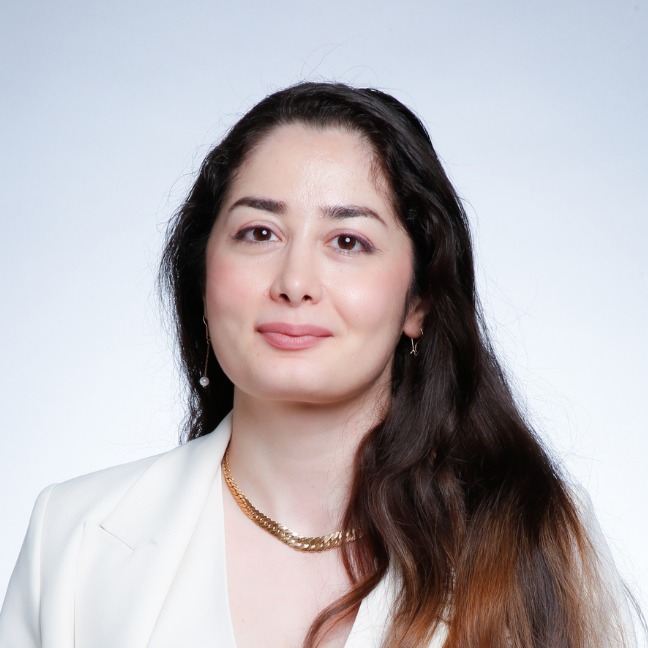
In the second episode of the UK Young Academy podcast, Fatemeh Shahbazi, an Associate Professor at the University of Warwick, shares her journey in mechanical engineering and computational fluid dynamics (CFD).
She discusses her passion for education, innovative teaching methods, and her involvement with the UK Young Academy, particularly the IMAGINE project aimed at empowering disadvantaged children.
Fatemeh reflects on the importance of collaboration and inclusivity in academia and encourages others to pursue their passions.
You can listen to the UK Young Academy podcast on all major streaming platforms, including:
Transcript
Please note that these transcripts have been automatically generated and may feature errors.
Alistair McConnell (01:05)
It’s great to see you. I was wondering if you could just introduce yourself a little bit and tell us about your background, what you really do.
Fatemeh Shahbazi (01:12)
Hello, it’s lovely to be here with both of you. ⁓ I’m Fatemeh Shahbazi. I’m an associate professor in WMG, University of Warwick, in mechanical engineering, engineering simulations, computational fluid dynamics. I’m also co-director of studies for three undergraduate courses. So basically day to day I develop courses, I work on research projects, students, mentoring, supervising and some collaborative works as well.
Alistair McConnell (01:44)
That’s quite a lot, have to say, pretty much. That’s definitely, that must keep your schedule really quite packed. ⁓ what actually sparked your interest in academia in the first place?
Fatemeh Shahbazi (01:56)
⁓ So let’s start with CFT and mechanical engineering and then I get to academia. So my work is computational fluid dynamics. So basically I transfer conservation of mass, momentum, energy to simulation so we can see those invisible forces which can be used for designing optimization for any application that has fluid in from and big devices, aerospace, automotive to smaller devices, even biosensors, the small devices like COVID tests. So I, when I was three or four around there, I am…
I wanted to build a commercial aeroplane, so I started gathering wood and nails in special closet. But as I started school, I got more in love with mathematics and physics, and I chose aerospace engineering for my bachelor degree.
And during that degree, I was introduced to CFT and then I fell in love with it. And I did my master degree in aerodynamics, focused on CFT and my PhD was again focused on CFT. I was using CFT simulations macrophoretic biosensors. And so that’s pretty much why I’m in love with this field.
Alistair McConnell (03:20)
Awesome.
Fatemeh Shahbazi (03:20)
And I also enjoy education. So even from my bachelor degree, I started teaching to schools, aerospace engineering, using and making gliders and different aeroplane And as I got to my PhD, I started doing a bit more teaching as well. really enjoy that. you’re doing teaching,
It gives you lots back. It keeps you so much motivated. You’re up date with lots of new technologies. And use innovative teaching methods and gamification in the class, which makes both the students and myself very alive in the class. So we all have fun. I teach apprenticeship courses, so they are with me every day from morning to evening. So yeah, these methods help.
And academia gives lots of flexibility, so it’s not just teaching. We are developing courses, we are doing research, we working with projects. my department, WMG, is very much focused in building those relations with industry. the main reason of building ⁓
WMG was to make sure that we prepare students ⁓ appropriate for industry as We are keeping that part alive as every day we have lots of things new, lots of flexibilities and lots of opportunities, which really makes me enjoy my work.
Alistair McConnell (04:40)
That sounds great. I say I love with how you’re describing your computational fluid dynamics. I think I got that one right, is that you could use it to design an aircraft. You can use it to simulate and design a boat, or you can literally do it for blood drops. mean, that range and then the fun of educating people with that and doing that, it just sounds absolutely amazing. all of that, obviously, is how you kind of you’re in your field, how you’re motivated. What actually motivated you to first get involved with the UK Young Academy? Something quite different from what I think you’ve done before.
Fatemeh Shahbazi (05:09)
Yes, definitely. I do lots of volunteer works. But this one, working on more challenges in an environment which like as an engineer can work on a involves like I can be working with artists, medics, people from social sciences in the same project. That is amazing and the amazing people who are there. I think that part of making it very much inclusive and making sure that different disciplines are involved in solving those challenges really made me excited to be part of it.
Alistair McConnell (05:44)
It’s really, really interesting to hear though you do a lot of volunteering, I feel that UK Young Academy, as you said, touches on so many other areas.
Fatemeh Shahbazi (05:53)
Definitely it is a very unique platform for us.
Wenmiao Yu (05:57)
I’m curious then, Fatemeh because I know you’ve been a member since the very first cohort. Can you tell us a bit about types of work that you’ve done so far with the UK Young Academy?
Fatemeh Shahbazi (06:08)
Yes, of course. I Co-lead IMAGINE Project. It is a project for children from disadvantaged backgrounds. The aim is to make sure that children from ⁓ those backgrounds even can IMAGINE a fantastic future for themselves.
can have access to different resources and they seeing what future can look like getting to their dream job or being introduced to different professions. We are using creativity, storytelling and different ways. We have three subgroups. first one, we are doing research. We are having a case study. So we are tailoring ⁓ our project based on the needs of that first case studies and the survey results. And we have the working to make sure that we provide a visibility of the heroes of people from that region as well, the people who have been definitely successful.
And the literacy. fantastic members. We have lots of members in our project, more than 25 members now. And it is very nice working with them. I’m also a member of ⁓ At Risk Scholars Project. And last year I co-organised the workshop for At-Risk Scholars for two days which was received very on the survey from the attendees I helped with strategy document. I helped organizing few internal webinars for development of the members as well.
Wenmiao Yu (07:49)
Yes, I remember attending the two day workshop for the At Risk scholars program actually, I thought was fascinating. And it was really, I guess, for me really eye opening to get the diversity of people under the one roof of the Royal Society. I thought was quite a good chance for me even as just like a member to learn from some of the other members presenting as well. So that was super interesting. you’ve certainly been really busy. when you were setting up your Imagine program.
Fatemeh Shahbazi (07:54)
Yeah.
Wenmiao Yu (08:15)
and getting it running and having it be quite a large, well attended group within the UK Young Academy. Were there any challenges that you faced along the way?
Fatemeh Shahbazi (08:24)
So time is always a all of us are super busy, even though we have lots of members on the group, but all of us are super busy. We are so lucky that ⁓ everyone are working with their passion. really appreciate the contribution that all of the members are having for that project.
We had bi-weekly meetings we were sharing the meeting minutes and actions to the members. So it was amazing. At the beginning, we were a bit worried about, okay, can everyone attend the meetings? Can we achieve these goals? But then we realized even the people who are not attending the meetings, are looking at the actions and moving on with it. So I think all the UK YA members are very passionate about what they do and what they are involved in. So that makes the work very much easier and very much different from all the other projects. So that solved it. Still, it is taking a bit of more time as a full-time project, but it is moving forward and having some interest from other young academics to start their Imagine project as well, which is fantastic. The other challenges, I think that time and making sure that we achieve the aims and objectives of each year was the main one.
Wenmiao Yu (09:42)
that sentiment is what Alistair and I have heard echoed from other members of the podcast that we’ve interviewed as well. I think, again, I think to see all these projects being created and being brought to fruition and inspiring other academies, I think that’s quite a testament to the energy behind the voluntary members in the UKYA. Fatemeh thank you very much for doing the foundational work in that.
Fatemeh Shahbazi (10:03)
Course it’s total pleasure.
Alistair McConnell (10:06)
And I know from the, directly from your At Risk Scholars project, we’ve had a new ⁓ part of the membership cohort come in directly through the effort that all of you have put into that, which was great. And for the IMAGINE, I think I even saw as the Young Academy of Ireland have just been kind of recruiting their second cohort. They have one of those projects going on as well. So it’s really that influence that you’re showing has really far reaching effects. And it’s just absolutely, it’s great to see. as you kind of linked in a way to this is how is your involvement
in the UK Academy actually shaped your own work or maybe even your perspective of things.
Fatemeh Shahbazi (10:40)
Yeah, definitely having this opportunity to be in this environment and especially with our yearly in-person meetings seeing everyone in person getting all of the updates from them of what they have been up to it’s very motivating and also these communications with different disciplines I think as academics can always reach out to different people for on a project but being in this environment and having this opportunity to be very close to them and we have the Slack channel, have emails and everyone are very, very much responsive and it makes it very I think communicating with different disciplines and working on a project with different disciplines, it developed me so very much. looking everyone’s achievement and success every year, it really makes me motivated.
Also being part of a UK Academy and having this opportunity that if we are, especially when we are working on our project, because we don’t want to start from scratch. So it’s always very good that we can get some inputs from the other Societies as well.
Alistair McConnell (11:47)
Yeah, I think being able to pull in the support from different of the National Academies, it just lets the projects that we do, both in the UK Academy and outside of it, just, I think hit that much harder and much more effectively than it might do otherwise. So actually, and we’ve already actually mentioned a couple of the bits of impact that your done from the UK Young Academy.
What impact do you hope your work will have within the UK Academy beyond it?
Fatemeh Shahbazi (12:12)
I really hope for at risk scholars that we can keep on organizing these workshops and improving them each year and providing all the necessaries because these at risk people are experts in their field, they are amazing. And when I was reviewing applications, I was amazed with of experience and expertise that they have to our bringing. So I hope we can be very helpful to them . For IMAGINE, I really hope can develop this platform that it is a starting with one case study, I hope that we can make generalised can tailor it for the need of different children and even if we can touch a few lives, few future engineers or a future scientists or artists and making them to get to their dream job and making them to work on their passionate field. I think that would be the further level, are hoping that, yes, as you mentioned, Young Academy of Ireland, having that collaboration, setting that up.
Maybe then after that we can, because some of our members are international as well, and they showed interest to setting up this platform for their own, for the other countries as well. So hopefully we can make it international. That would be fantastic because I really believe that children have worries of the limitation of money or having a lack of support from their parents or their schools or so these things shouldn’t limit them from what they can become. we are hoping that we can show it to them and because there are loads of amazing resources available.
Alistair McConnell (13:51)
the Imagine project, it sounds so good. And I’m really hoping it just like, we know it’s going far anyway. I just hope it keeps going and going. We mentioned or asked you a little bit about challenges you faced along the way so far. But actually, we’re going to flip that slightly. Are there actually any key lessons you’ve learned through UK Young Academy involvement?
Fatemeh Shahbazi (14:11)
Well, there are lots and lots of amazing, all the members are amazing, but I have seen lots of superwoman in the UK Academy. ⁓ so seeing how people are working super hard on their dreams every day, the amazing speakers that we invite every time every year.
That gives me very much motivation of okay, this is the path and you need to work hard on your dreams and they are achievable. Also working on one project, we’re using different expertise from different It really opens your eyes that you were focused on one aspect, but there were all of these different aspects that you didn’t include
And that really, really opens lots and lots of ideas and doors to it, which is fantastic. And it’s really made me more believe in how important it is that we need sure that our solutions are inclusive. We are bringing all of the ideas in and looking to it with different, expertise.
Wenmiao Yu (15:14)
Love that. Fatemeh, where do you see the UK Young Academy being in three years time?
Fatemeh Shahbazi (15:19)
Well, ⁓ I ⁓ really hope that our impact is more evident we can get to that because we have already started projects. I hope that they can be used to inform policies. I hope that they can be used to set a model for even if we want to apply them internationally as well and link them to the other young academies as well. So in three years time, if we can set up these projects into at least Ireland and a few other and starting to do that, show that impact, I think that would be fantastic.
Wenmiao Yu (15:55)
great and where would you be in three years time?
Fatemeh Shahbazi (15:58)
In three years time… I would like to still be with WMG, which is fantastic. I love working here and I hope can of my students that finish their projects, they are getting lots of results from them and they are actually applying CFT simulation in their day-to-day work, in industry, I’m working on a few CFT project as well, and I hope that one of those gets into a product. I had a startup before, so I’m a bit tempted. of them can get to a good result.
Wenmiao Yu (16:33)
Now that we’ve started a new academic year, what’s one project in your day job that you’re most excited about?
Fatemeh Shahbazi (16:39)
One of them is aerodynamic analysis of part of a vehicle which is for improved performance and safety which I hope that it goes to a very good result. Another one is we are focused digital education, making sure that we setting up for the ⁓ future ⁓ using AI in our education both for students and educators.
Wenmiao Yu (17:05)
That’s great. And how could other UK Young Academy members engage with your work?
Fatemeh Shahbazi (17:11)
They can always contact me whether it is about Imagine Project or At Risk Scholars Scholars or whether it is about my own expertise, CFT simulations or AI in education. I’m always open to have collaborations, having a talk. We can have an informal chat online or in person. And whenever you want to come to Warwick I would be very happy and honored to host you as well.
Wenmiao Yu (17:39)
That’s great, thank you.
Alistair McConnell (17:40)
Yeah, that’d be great. It might take a drive down the road at some point from ⁓ Edinburgh to Warwick and come have a look around. It always sounds like quite a fascinating place down that way in a good university.
Fatemeh Shahbazi (17:40)
Thank
Alistair McConnell (17:50)
getting now towards the end. But before we go, one of the first things we’ve got is we’ve got the quick fire round. Don’t worry, no pressure. It’s not going to be like a sort of like surprise quiz or anything like we might in the good old days, given some of the students really much for it. But what this is, is I just want you to think, when I give you the question, does the first thing that comes to your head, just say it.
So: best piece of advice you’ve received.
Fatemeh Shahbazi (18:15)
Just do it and say yes to opportunities and dive into the things that scare you.
Alistair McConnell (18:21)
Perfect. It does not surprise me of how many times people we’ve done for this say that, because it’s one of the real things, I think, that brings a lot of the UK Academy members together for that. OK. One thing you can’t work without.
Fatemeh Shahbazi (18:35)
My noise cancelling device in a very crowded place.
Alistair McConnell (18:39)
Yes, yes, having some peace does definitely help the thought process. Right.
Fatemeh Shahbazi (18:44)
Yeah, definitely.
Alistair McConnell (18:45)
That’s all the quick fire questions done.
Fatemeh Shahbazi (18:48)
Thank you.
Wenmiao Yu (18:48)
That’s great. Fatemeh, before we leave, you have any final thoughts or pieces of advice you want to give to our listeners?
Fatemeh Shahbazi (18:56)
Just do the things that you love and yeah, dream big!
Wenmiao Yu (19:02)
Wonderful. Thank you very much for your time today.
Fatemeh Shahbazi (19:04)
Thank you so much.
Learn more about Fatemeh and connect:
Author
Lead Author
Fatemeh Shahbazi
Assistant Professor
University of Warwick

Supporting Authors
Wenmiao Yu
Co-Founder & Director of Business Development
Quantum Dice Ltd

Alistair McConnell
Assistant Professor in Computer Science
Heriot-Watt University