Alistair McConnell and Wenmiao Yu talk all things UK Young Academy
UK Young Academy podcast | Season 1 | Episode 6
Join the leaders of tomorrow on the UK Young Academy podcast. Hear from members working across disciplines and sectors as they share their journeys, the highs and lows of their careers, and what drives them to make a difference.

In this final episode of season 1 of the UK Young Academy podcast, Co-hosts Alistair McConnell, Associate Professor in Computer Science at Heriot-Watt University, and Wenmiao Yu, entrepreneur and co-founder of Quantum Dice, share their backgrounds, motivations for joining the UK Young Academy, and their contributions to various projects in the Young Academy’s early years.
They discuss the importance of collaboration within academia, and the conversation also touches on the cultural dynamics of academia in the UK. They reflect on the many insights gained from their guests throughout the season.
You can listen to the UK Young Academy podcast on all major streaming platforms, including:
Transcript
Please note that these transcripts have been automatically generated and may feature errors.
Alistair McConnell (01:05)
Hello and welcome back to the UK Young Academy podcast. Now this episode is going to be slightly different from all that you’ve seen so far. Generally, you’ve seen both of us as co-hosts talking to another member of the UK Young Academy, really chatting, getting to know them about the work they do, the involvement in the UKYA and other different aspects. But we thought it’s about time, you got to listen a little bit, just a little bit about who we actually are.
Could you introduce yourself and tell us a little bit about your background?
Wenmiao Yu (01:35)
I’m Wenmiao. I’m one of the co-hosts of the UK Young Academy podcast and I’ve been a member since 2023. My day job is as an entrepreneur. I’m co-founder of a spinout from the University of Oxford called Quantum Dice. And essentially we build products using quantum technologies for large enterprises. My interest outside of work is actually in the mental health space. And this just came because of my own experiences in building a startup. And I’m actually also the host of another podcast called the “Low to Grow” podcast.
Alistair McConnell (02:08)
Thank very much Wenmiao. I’m Alistair McConnell. My day job is I’m an associate professor in robotics. I mostly work in soft robotics and, health care, sort of robotics to technology, really focusing on how I can use of different technology in applied ways, take it out from my lab into reality and actually really get it to work in a useful manner.
What sparked my interest within the field of robotics. It’s something which I’ve always liked to build things. And I just always, when I was growing up, when I did my degree, I liked getting my hands on and building things, but I wanted whatever I built to be useful, to be practical, and to actually get it out into the real world. So that’s why I do the work I do. And sometimes why I also do try a lot of public engagement and some spinout work as well.
But a question that we’ve asked every single person so far, and it’s probably a key one as well for anyone listening who’s not even part of the UK Young Academy, but maybe contemplating being a part of it actually motivated you first to get involved with the UK Young Academy?
Wenmiao Yu (03:17)
Well Alistair, I actually think that my reasons for applying for the UK Young Academy was quite similar to some of the guests that we’ve had on for this season. my day-to-day interactions are with people within my own startup, and we’re just a really small team of 20 people all working on commercialising quantum technologies in cybersecurity. And I just really, really did not want to have tunnel vision, and I wanted to be able to work really meaningfully with other careers.
They’re in startups or in academia or in public service, to really work on some more society-related challenges and also initiatives as well. And I think I saw the advert or the call for applications for the first cohort of the UK Young Academy at the Royal Academy of Engineering, which is just next door. So it was really, it was just luck that I saw this announcement and I’m really glad that I was able to apply.
What about yourself?
Alistair McConnell (04:10)
So yeah, it’s an interesting one for me. I have to say, sometimes I feel like my memory is like a sieve, but it was looking back and I really, I’m very much aware, I work in academia half the time seems like that kind of ivory tower you want to get out. And even just sometimes you get stuck in your own discipline, just trying to get out there, meet different people in different areas within the university. You can do that to an extent, but it’s still kind of tricky. You’re still in the small university.
I saw the UK Young Academy, I think it was actually on an advert put out by the Young Academy of Scotland. I have to say, so as a Scotsman, shout out to the Young Academy of Scotland, fantastic group. I thought it’s going to be like huge competition, not chance, but I don’t care. I’m going to go for it anyway. And yeah, that’s how I first got involved really for it. So was really happy at that point.
Can you tell me a little bit about some of work you have been doing at UK Young Academy?
Wenmiao Yu (05:01)
Yep, sure. I think we both joined in the same year, so in that first year in 2023, I believe.
Alistair McConnell (05:08)
It does, it feels so long ago, but yeah, I think we were part of the founding cohort for this.
Wenmiao Yu (05:11)
Yep, and it’s been a delight to see it grow from then on. I think one of the first pieces of work that I did was actually contributing towards the strategy document. And I think that process was one where I first had the experience of, I guess, collaborating with a lot of other volunteer members such a big document that had a lot of moving parts. So I think that’s when I first got a flavour for what it’s like working with a lot of other members from academia, rather than from the startup industry and also from multiple disciplines as well. So I found that hugely interesting. And I also think I personally learned a lot by how that process was coordinated and also managed. For me being able to see that strategy concrete, it was a physical piece of documentation that we had on the initiation for the second cohort. I think that just showed how much work went on behind the scenes. And also how it was able to be formatted and also communicated in a really clear manner that was accepted by all of the membership, which is quite a huge number of people.
One other highlight that I had of my time in the UK Young Academy is actually related to what one of our previous guests had mentioned, which was the At-Risk Scholars project and the two-day conference that they had. I had the pleasure of being invited to give a talk on careers outside of academia to the group that was there. And it was really interesting. To me, I don’t think that in my day-to-day, I would have had a chance to speak to as many scholars with that kind of lived experience before. And it was really interesting speaking to them and actually learning about how each of their personal pathways actually got them to where they are and how they end up in the UK and what kind of challenges that they have coming up. And then I think the other piece of work that I’m really excited about is actually doing this podcast with you, Alistair. I think it’s the first podcast with the UK Young Academy and I’m hoping that we’ll be able to set it up so up so that it’s part of the branding and also the activities of the UK Young Academy. I know that also been super heavily involved. Yeah, what kind of work have you been doing?
Alistair McConnell (07:12)
Yes, and I would say that strategy document and our governance document, all the different ones everyone worked through, I have occasionally joked about sort of they are long documents and if I do need to sleep, I might sometimes read those, but they are so well put together and they form the foundations of what we need to do. And after seeing those and thinking, you know, most people who worked on this haven’t really done a lot of this kind of stuff before, but it brought everyone together in quite a… a different field and everyone could really contribute. Yeah, having those tangible ones that, like we said last year, you can literally hand to people at the new members going, look, this is something, tangible proof of what we’ve done was great.
I think now we’ve just got over 150 members. So we’re, we’re expanding from our initial first year for our cohort of 67 members. We’re really, we’re really getting up there. And obviously, we’ve got a couple of years left, it feels like time has flown past. I have to say for this.
So what have I been doing? Well, a couple of projects I’ve been working on. But first, actually, I’ll touch on the Executive Group. I stood to be one of the Executive members, and I wasn’t initially selected, completely fair. It was a really strong competition, and I was so happy to see who actually got picked. I then actually was picked for maternity cover for one of our members, and this happened twice. So I won my second maternity cover. So that’s how I have been quite involved in the Executive Group as well. I’ve represented the UK Young Academy at the European Academies Conference. And then also, so it’s the both the YASAS and the ENYA. And I cannot remember what those acronyms stands for, but they’re typically Young Academies of Science. Then one of them is the European National Young Academy, I think it is.
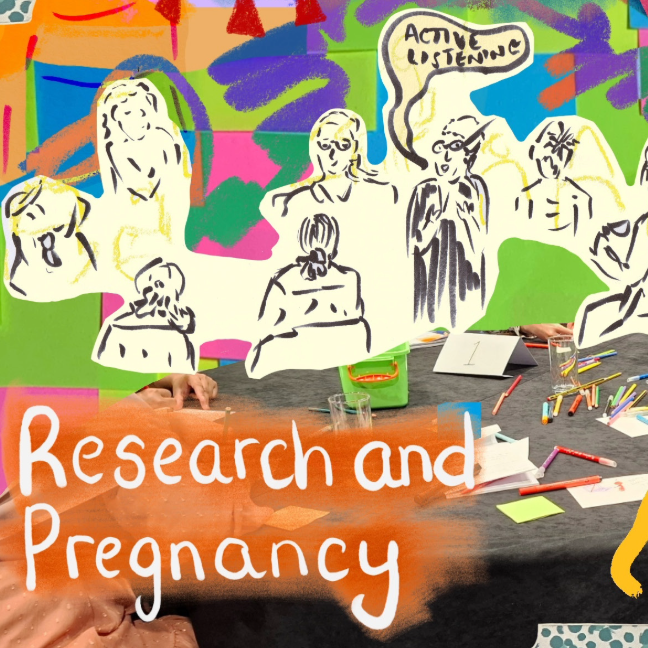
We can post links at the end of this. But the two projects I’ve worked on, I’ve been working as part of the Health OpenSpace project, but we actually just had our main event at Health OpenSpaces , working with a group of people, volunteers who came along to figure out and to talk about barriers to people who are contemplating pregnancy and the use of different medications. So it was really fascinating, and I learned a huge amount, not just from the organisation of the event. And the other one I’m part of is Making Waves. So this is seeing about how we can better incorporate education about plankton and other aspects in the UK curriculum. And I say UK curriculum because we wanted to do this both within the Scottish, the Welsh, the Northern Irish and the English curriculum. So that in itself, just even thinking of the different devolved nations was quite a challenge. I would say both of those I’ve been really proud of doing because they were so far out of the work I normally do. I’ve just been so happy with getting to work with the different people I have within that.
But I mean, if you could pick like what’s a project or initiative you’re particularly proud of, or would it just be all of them? What do think?
Wenmiao Yu (10:02)
I think for me, I would have to say it’s one of the working groups that I’m involved with now, which is also one of the new ones, actually. I seem to have a knack for getting myself involved in starting new things. It’s the Communications Working Group. And I think that’s just been set up.
But I actually wanted to circle and ask was the process of applying for the Executive Group of the UK Young Academy like? Because I guess when you applied, it was in our first cohort. You know, it’s when things and structures and mechanisms were still being set up.
Alistair McConnell (10:30)
Yeah, so I don’t, I can’t recall if it changed. I think there was a few refinements between the sort of that very much initial kind of kick off exec group and the, and the next round that came in. But really, what it was, there was a call that went out to everyone and was saying, look, anyone who’s interested in being involved in the Executive Group, it’s going to be, at that point, was kind of like roughly here’s the stuff you might actually be doing.
Here’s, you’ll be shaping the direction of it. You’ll be engaging with the members. There was a lot that wasn’t quite nailed down at that point, which did mean when we started, there was a huge amount of groundwork we laid, just to try to, to figure everything out. Now I actually, I think came on probably about three, maybe six months into it. So that time period had already given the rest of the members and especially the person who I was covering for maternity leave time to really put the foundations in. So I came out in a great time, but I could still contribute and there was still a lot of work to be done. But I think it was just, was, if you have what we apply to the UK Young Academy to be, which was like, what do you actually want to contribute? Why do you want to be a part of this? That was kind of how we distilled it down for the exec group as well. It was like, first things first, actually, I think the first question, or it should have been if it was the first, was do you have time for this?
And again, it was same for the UK Young Academy. It’s like, is something extra that you want to do, you need to put time into. And for the Executive Group, it was like, well, if you’re putting a small amount of time into the UK Young Academy, it’s going to have to be a lot bigger to do the exec group. And that was like maybe some of us underestimated, but it was 100% worth it for that as well.
Wenmiao Yu (12:10)
No, for sure. And the impact is pretty evident across the membership. So yeah, so thank you for doing the work alongside your other group members. But interesting that you mentioned time, because I think, again, like the time commitment and the time that it takes to actually contribute meaningfully to the UK Young Academy has come up across quite a few of our interviews so far for season one. I mean, I guess what would be good advice that you would give to someone considering, you know, maybe taking up ownership of a project or an initiative within the UK Young Academy?
Alistair McConnell (12:40)
Great question. And it’s something which is probably one of the reasons I’ve, I’ve not right at the second gone, you know, I’ve got this particular idea and I want to drive into a project. I do actually have that for maybe the next, the next round. It’s a bit, it is a time commitment doing this. And when you’re really thinking about a project, you first of all have to be thinking I’m not just duplicating or just doing something that’s going to interest me. It’s to do with my work.
You really need to think outside the box for this and go, OK, I realise there are problems, are things I need to address. So how do I actually do that in the form of a project? Or at least that’s how I viewed it. And then going, is this something I can actually do within the UK Academy? Is it suitable? Do we have the resources? And then kind of distilling it down. But while doing that, going, I need to find some other like-minded individuals, because this isn’t just a one-person project.
You need other people, you engage other people. Now it could only be a few people. It could be 20 or 30 people. Obviously, the more people, the more management, the more tricky some things can get. But I think for the at-risk scholars, you’ve got quite a few. Is it like 20 people maybe or something like that involved in that? That was a big, really intense project. But the outcomes for that were like, we have a part of our cohort last year was entirely from that. That was so good to see just coming directly through that new membership line that was established. Yeah, I was really, mean, going from this, say with that, like what, what challenges do you think you’ve actually faced either with that or like with any of the work you’ve done within the UK Young Academy and how did you sort of get over those issues or overcome the hurdles at that point?
Wenmiao Yu (14:23)
I think for me, honestly, I would have to say it’s also time management and also time commitment. So similar to what you have said and also what other members have said, I think for me, maybe at the beginning when it was being set up and maybe when projects were just being set up, there was no kind of like reference to how much time commitment would being part of the UK Young Academy be. But I think what I’ve learned is actually it worked well to be quite clear with myself and quite honest with myself about how much time would I actually have, say like in a quarter-by-quarter basis to spend on the UK Young Academy. And then maybe just really snatching up opportunities when I know that I would have more spare time to then really spend that energy on maybe more focused projects that I can do through the UK Young Academy almost in like a sprint fashion, rather than like a long year-long marathon type fashion.
I think also one of the things that I really learned and this came through just working, you know, with various groups across the UKYA for example, in the strategy document or on getting some of the initial guidance documents for the Communications Working Group up and running is that sometimes things can take a lot of time, especially when you have a large enough group of voluntary members. But in the end, it’s that spirit of collaboration and that desire to get all voices heard. I think that that’s really important.
And my learning is, you know, it might take a bit longer, but in the end you have a really well thought out piece of document. And also everyone in that group has been brought along on that journey and feels that they have made a good contribution and that their views have heard. So I think that speaks to the culture within the UK, yeah, within the UKYA membership. Yeah, oops, sorry. What was I going to say?
Alistair McConnell (16:08)
I was just going to agree, it’s 100% that open ability. And I think everyone is really active in trying to actually listen to what people are saying as well. And it makes such a difference compared to occasionally with like a regular job or more siloed institution, you actually hear more people with different perspectives, diverse views, and they’re listened to it, which is something that’s really nice to hear and to see.
Wenmiao Yu (16:32)
Yep, for sure. Can I ask because I don’t work in academia, is that spirit what is seen across academia in the UK generally?
Alistair McConnell (16:42)
You mean the spirit of like actually listening to more people and getting those kind of diverse views or the opposite of that? I would like to say it’s definitely changing. I think at least within my, now again, I’ve only worked a couple of universities. I would like to say that they are, people are being, well, encouraged or a lot of the newer academics coming in and going, we can’t be-
Wenmiao Yu (16:46)
Yeah, the former.
Alistair McConnell (17:06)
-one person stuck on an island for this, we can’t just be in our silos or whatever kind of stereotype that you actually want for this. We need to do this. And I think a lot of people now are actively going out their way to get involved more in these kinds of actual, well, just in listening to people, in actually engaging and really thinking about how you can have a more diverse sort of group of people in all senses and how to engage them in the best of ways, not to just kind of, I don’t know, maybe in the past almost more tokenism for it to avoid any of that, to actually do things as they should be done. I don’t think anywhere is perfect yet for it. I think we really do strive to overcome this. I see it slowly changing for it. And the universities themselves, I think, are very much aware that it has to change.
And I mean, I’m always amazed with my undergraduate students coming in, just one of how honest they are towards me, which is mostly refreshing, apart from occasionally when I get my dress sense critique, but that is generally fair enough. I still wear tweed. But it’s good just on like the feedback you get from the students, the engagement and their honesty for these things really does make a change. And it lines up actually with what I’ve experienced in the UK Young Academy, which is really, really, it puts a smile on my face when that happens.
Wenmiao Yu (18:27)
Hmm, that’s really good to hear actually. But yeah, that’s super interesting. And I wonder, you know, if we speak to other young academies across the world. Yeah, I wonder if they would also, really relate to the culture that we have. Maybe it’s something that’s shared across the various young academies. And also, I guess, my curiosity has been how similar it is the culture within a country’s young academy, how similar is that to the culture of academia in that country? I find that super interesting.
Alistair McConnell (18:57)
Well, it’s actually a very good point, though, you make on that, just interrupt us, the fact that we’re one of the few young academies that doesn’t just go for academics. So there’s a lot of a lot of other young academies. I mean, the name Young Academy, because we’re academics, industry, charities, third sector individuals, just we are really diverse in what we regard as coming from and not just going by the young aspect for it.
Wenmiao Yu (19:05)
Hmm.
Alistair McConnell (19:23)
We are really broad in our membership, which we try to reflect and deliberately reflect when doing our membership selection as well. It’s great to see, but we are one of the rare ones for that, I would point out. And it does lead to some interesting conversations with other young academies when we talk about it.
Wenmiao Yu (19:40)
Interesting. What are some responses that you’ve had from young academies that, you know, maybe only accept people from within academia?
Alistair McConnell (19:48)
A lot of them is more just even talking about, how do you actually do membership selection? Because it’s a case that they might have a minimum qualification of a doctorate for every single member for it, which we don’t. So that can even just be the most basic of the questions. And then we get a bit more into, well, okay, well, how do you actually then like, value like career stage? How do you say like, what excellent work has been done? Because it’s not just a case of, I published five papers in Nature, or I’ve got this big a grant.
Wenmiao Yu (19:59)
Hmm.
Alistair McConnell (20:17)
There is a lot more nuance and depth. And I know the other young academies have also more nuance and depth. They are definitely not just, and I never would say this or suggest it, – they purely look at grants or anything like that because they don’t. But as we have to look at a broader range and it’s why our training documents for reviewing and actually for of the new membership applicants are really extensive. And we do more online training sessions as well for this. And we also have people reviewing who are part of our member academies who don’t have to be purely an academic, even with the name academies, our senior societies, I think would be a way of saying it.
Wenmiao Yu (20:53)
No, for sure. That’s a really interesting point. And you’ve actually just made me remember at the All Members’ Meeting where we welcomed the third cohort, I think the speaker that we had for that evening was Elspeth Finch. And she actually runs her own company in technology. And I thought she gave an amazing speech, but I think, you know, it’s good that we are able to get access to people such as Elspeth, too you know, for her to really share her own experience as a female innovating and trying to build companies. Because I feel like a lot of the knowledge and skills is transferable and also interest is quite wide. So, for example, I remember that at actually the of the All Members’ Meetings that I’ve been to, I think I’ve definitely had at least one conversation with another member who is an academic, but who is actively exploring commercialisation or university spinout options. And it’s good to be able to have that type of networking and that type of contact being made. Excited to see how the demographics of the UKYA profile will change as well. And again, I think it just speaks to the fact that you and I would host in this podcast together. You’re from academia, I’m from the startup world. And I actually found it super interesting because I think know, we’ve had to mesh our work styles together. And I think co-hosting a podcast always interesting because you have different, I guess, interview styles. But yeah, how have you found the process so far?
Alistair McConnell (22:21)
I mean, well, so this is, so unlike you, I don’t have the experience of any other podcasts. This is the first podcast that I’ve actually done. And it’s been, it’s been really fun, tricky in some ways, really fun. I mean, that first thing I’d have just said, meshing our styles and also meshing our calendars has been quite a challenge, just for you and me getting organised and then having to find time to slot in all of our great people that we’ve been interviewing as well. Because the members have been fantastic. Obviously, we can’t have a podcast without our guests on it, but just trying to, trying to arrange that. So I’m sure there should be an easier way to do this. But, at that point, I think it was just you and some kind of calendar program. It was like, yep, we’ll get that done. And we managed, really well for that. So I would have said the, the actual process of, of filming it, apart from the odd technical hitch I’ve had where I think every bit of technology hated me for a brief period and nothing worked. It’s been really good. I mean, it’s been quite a straightforward setup. Now I’m kitted with some headphones, a laptop and a camera. I think you’re probably the same, but maybe sort of minus the headphones, but with a better microphone. Sort of, yeah.
Wenmiao Yu (23:14)
Thank you.
Yep, I invested into a wireless microphone, which I highly recommend.
Alistair McConnell (23:34)
Nice. Yeah, I think I’ll be doing it. This is these headsets – either it was a legacy from when I used to do quite a lot of gaming and now it’s just for all my online, all my online calls. Having that it’s really been quite straightforward just to sort sit back in the office and do this. And a couple of times, luckily at university, we had a studio I could go into, but it’s in high demand. So one episode I’m in that and it probably looks really sort of on point and professional the rest of the time. Well, as you can just see, I’m kind of chilling in my office, where luckily my shared office space mostly works remote. That’s quite handy. How about you? What have you found with the process of filming it?
Wenmiao Yu (24:08)
I mean, I think the reception’s been great because I think first this idea of getting the podcast, it had to go through the Communications Working Group, and it went through a few iterations, and I think it’s great that we have all the members from our working group supporting it. And then I think now is also a good time to shout out to the UKYA Staff team, Lucy especially, who’s been amazing in helping us with the podcast and will actually be responsible for some of the dissemination work that will happen around it afterwards. And I actually think, know, Alistair, I think now is a good time to be starting a podcast, because now, as for the UK Young Academy has been fleshed out and the Staff team also has slightly increased. It just means that the members and the staff can really work together in harmony to really amplify the projects that we’re doing. And I think for me it’s been really rewarding to see the podcast come together and to really have a bit more time on a one-to-one style with some of our guests. Because I think, you know, you and I, were discussing earlier about how sometimes at various events, you don’t really have that time for that in-depth conversation and, yeah, and to learn a bit more about what drives some of our members.
Alistair McConnell (25:17)
Yeah, I’ve got to the number of times that every meeting I go to, there’ll be someone who is like, I know I’ve spoken to a little bit and you get to chat a bit more, but in this is really managed to delve in deeper to what people do in like that. Well, both actually in their work and quite often we hear people say even in like their, their day-to-day living and they’re outside of work, what their actual interests are, which is great. And I would say when you set a Staff team, definitely a hundred percent agree. Staff team, fantastic. Lucy been really, really helpful with all of this.
And I think probably maybe it’s that kind of quick plan. Do we get this for the future in the next All Members’ Meeting? We’ll try and do this kind of live podcast. We definitely need to drag the staff team along for that as well, because they, um, I feel they’re always underappreciated for these things, but the amount of work they do herding all of us, it doesn’t matter if you’re an academic, entrepreneur, uh, so anyone from like a charity, whatever, think when you have to 150 people into a kind of meeting or more quite soon.
That’s beyond herding cats. That’s a level of dedication that definitely the Staff team manage every time with just perfection, I would say for it.
I mean, with, with everything that we’ve kind of gone through so far in this first season, kind of key learnings have you taken? Obviously you’ve done another podcast and you’ve brought some of those learnings for this, but what kind of key learnings do you think maybe you’ve got from this that you could transfer or as you even just, what have you got from our guests actually? What insights have we managed to get from them?
Wenmiao Yu (26:38)
I think the main insight I got from all the guests that we’ve spoken to for season one, I think what came across really strongly is this innate desire of the members to collaborate and to learn/ engage with people outside of their discipline. I think it’s very refreshing to have those types of conversations and to be influenced by people with that kind of mindset because then it’s just for me anyway, it just makes me more energetic and also curious about things that I’m not working on or not aware of yet. So I guess in a nutshell, think doing this podcast, it just reminded me of how open-minded all the UK Young Academy members are. And it just helps to reinforce this ethos, which I want to take into my day-to-day as well. What about you, Alistair?
Alistair McConnell (27:27)
So I mean, have to say what I’ve got from a lot of the guests, and I’m trying to remember back. And I think it was, was kind of that, was it that Nike advert of just do it , pretty much for it. It really, I’ve got that from every single member who’s come on here. I like, well, why did they like what they just went, I’m just going to go for it. I’m just going to join the UK Young Academy, and I was really passionate about this. And I just did it. I went for it. It was every single person had a drive and just went for what they wanted. And a lot of them said, no, didn’t get it, didn’t get it the first time. I had to have a backup plan, change my ideas, different things given, but the, the passion and the drive, and it’s a cliche, I know, but it’s the go for what they want and to keep pushing, to try and get it. That was kind of one of the key learnings I would have said I took from that. And I think just actually patience as well. All of them have said, coming through, like they’ve had really interesting projects in different fields within the UK Young Academy outside , and just having the resilience and the patience to see those projects through some of the hard times as well has helped dramatically. So I’m going to take both of those as kind of, I’d say my two key learnings from it.
Wenmiao Yu (28:26)
Mm hmm. I love that.
And you know, you just reminded me because that ethos of just do it is kind of what Keri mentioned about how she only got into the UK Young Academy on her second try, but she didn’t give up. And when I guess for yourself, as you shared earlier, you applied in like initially to the Executive Group, didn’t get in, but then now you’re still, you know, super involved with that and contributing that.
Alistair McConnell (28:54)
We’ve had quite a few members who actually haven’t gotten their first attempt, have gone, taken the feedback, applied again, and come back and they’ve got in, I can’t remember the exact statistics.
But it really does show that both the feedback that we give and the determination by these people to actually to reapply, engage again, it does pay off. A lot of them will get through. It was great to Keri come through, and she’s been such an active member, as have all the people who have been speaking to. It’s been…
Wenmiao Yu (29:22)
Mm.
Alistair McConnell (29:24)
I couldn’t pick just one person after everyone was spoken to who said, oh, that was the best one to interview as well. Also, don’t want to be accused of favouritism or anything like that.
Wenmiao Yu (29:33)
No, for sure. But yeah, I’m really glad that you mentioned that about having that determination to see things through and the patience.
So I guess maybe for me, know, I was really happy that you volunteered to be the co-host for season one. Quite curious to understand for you, you know, what impact do you want the UK Young Academy’s podcast to have?
Alistair McConnell (29:55)
That’s a great question. I mean, I was really happy to volunteer. Not so I can hear myself repeatedly on a podcast or anything like that. I’m sure my other half would normally be going, he’s to be speaking more. No. But really, it’s something that I just want to try, and I have enjoyed it. The impact, I want the impact to be where people in the UK Young Academy get a bit more exposure. I mean, like we said, there’s sometimes a case that we speak to each other a little bit about these events, and we get a flavour of what each of us does. Now we can go away, we can work together, we can contact each other. But again, if you haven’t really talked much to someone, maybe you don’t have the time. If you’re interested and you just want to, I don’t know, let’s say play this in the background, and you hear a bit more, and you go, oh, actually that person, I spoke to them. They’re really good. All that work really aligns with what I do. I just want to pick them up more. Just that extra bit of knowledge and extra bit of that would be great if I even if I just have one person coming in, oh, I start up a conversation because I heard them on the podcast that that would be really good for me or having a new member come in and say, I listened to your podcast. You were annoying, but then I listened to the actual person you were interviewing, who was really good. And I actually joined because I liked their work, or I thought they did something similar to what I am. They represent the kind of thing I go for, and I joined because of them. That would also be great to hear. Maybe not that I’m too annoying, but the rest would be good. How about yourself? What do you think the impact or what do you hope the impact of this podcast will be?
Wenmiao Yu (31:25)
I think for me the main impact that I hope it will have is to be a resource for people who maybe aren’t familiar with the UK Young Academy or maybe they’re thinking about applying. I’m hoping for it to be a resource that they can go to to get a bit of a flavour of what types of activities are done within the UK Young Academy, but also to get to know some of the members on a slightly deeper level, beyond what’s just written in the bio online.
Alistair McConnell (31:50)
Yeah, definitely.
I think that’s pretty much all the questions that, well, I have for you.
We haven’t subjected each other to a quickfire round, I think could be, which is quite, which-
Wenmiao Yu (31:58)
Yeah, I was just thinking of that.
Maybe we just do one question then from the quickfire round.
Alistair McConnell (32:04)
Okay, you can go first and ask me and let’s see how good I’m doing.
Wenmiao Yu (32:07)
Okay, so Alistair here’s one of the quickfire questions for you. What is one thing that you can’t work without?
Alistair McConnell (32:13)
I always, and it sounds such a cliche and so many people have said it, is my notebook and my pen and pencil, have to say, because I do end up loving to do some drawing as well. So definitely those. And for yourself, how about one thing that you need to have?
Wenmiao Yu (32:29)
So I wanted to say my laptop, then now I think about it as actually my phone.
Alistair McConnell (32:33)
That’s fair. That’s fair. I mean, we do a huge amount for my phone. I have to say, if I put mine away, my stress might go away as well, pretty much for it. But no, I can, I can definitely sympathise with that and, and, and agree a bit. Maybe that’s my number, my number two position. My car’s probably up there as well.
Wenmiao Yu (32:38)
Perfect. Alistair, it’s been a pleasure co-hosting season one with you.
Alistair McConnell (32:53)
Wenmiao, It’s been a pleasure co-hosting it as well. Hopefully else enjoys listening as well. So thank you all very much.
Wenmiao Yu (33:00)
Great. Thank you everyone for listening.
Learn more about Wenmiao and connect
Learn more about Alistair and connect
Author