
What does it mean to thrive at work when your brain doesn’t quite fit the conventional mould?
1 in 14 people are affected by Developmental Language Disorder, yet it remains largely unknown. We’re asking neurodivergent employees to share their workplace experiences with us on Developmental Language Disorder awareness day.

Today is Developmental Language Disorder (DLD) Awareness Day, and this year’s theme is ‘You can’t see DLD.’
It’s a fitting reminder: 1 in 14 people are affected by DLD, yet it remains largely unknown. Those with DLD struggle to understand and speak their native language for no obvious reason.
DLD isn’t alone in being invisible. For many neurodivergent employees — whether diagnosed or self-identifying — the workplace can be a maze of unspoken expectations, invisible hurdles, and policies that don’t quite meet reality. Too often, their challenges are misunderstood or simply unseen.
What can we do about it?
Take part in our THRIVE survey to share your experiences as a neurodivergent person in the workplace!
Do you identify as neurodivergent? Do you have friends, family, or colleagues who do? How has neurodivergence affected the way you approach work — or the way you’re seen at work?
What can you ask for? What tools are there to help? What support is there that meets everybody’s needs? And how easy is it to access?
These are just some of the questions our multidisciplinary team behind the UK Young Academy’s THRIVE project are hoping to find answers to with our survey.
We’ve got some of the country’s leading early and mid-career researchers in the fast-evolving neurodivergence landscape on the case. We’ve also brought in people with lived experience and allies who want to make a difference.
We’re steering clear of making blanket assumptions about what works at work; instead, we’re starting with the people who know best: neurodivergent individuals themselves.
But we can’t do this alone. It’s a big job. We’re all volunteering our time, but we need to hear from those who are directly affected across the UK.
THRIVE was deliberately chosen as our umbrella name. After all, we’re ‘Transforming How we Recognise, Include, and Value Everyone in education and work’ (get your inner geek out if you love word play), so we must reflect the wide experiences that people have.
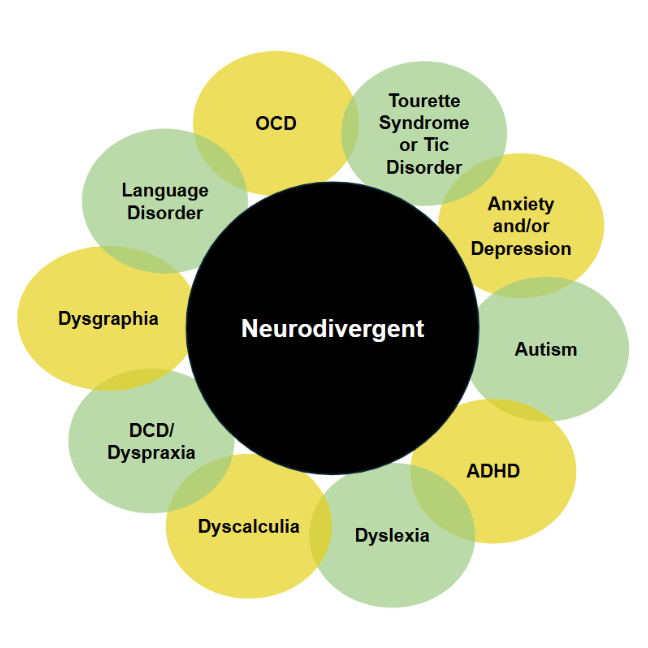
Neurodivergence can take many forms, and we want to hear from as many people as possible. On DLD Awareness Day especially, we want to emphasise that whether your experience is with DLD or any other form of neurodivergence – Autism, ADHD, dyspraxia, dyscalculia, anxiety, depression, dyslexia, dysgraphia, obsessive compulsive disorder, Tourette syndrome, Tic disorder – we know that neurodiversity is complex, and many people show a variety of neurodivergent traits. You may identify strongly with one or several of these. We do not make assumptions and do not have preferences; our aim is to try to involve people with any combination of these traits (or more) to get the full picture. We want to find out what it is that works for you.
There will be others too that we may not have identified here – but come forth, don’t be shy. This is your chance to share what can help you flourish.
From awareness to real change
We know that awareness campaigns like DLD Awareness Day have been incredibly successful in reducing stigma and helping people – including members of our own incredibly diverse team – recognise that their brain works differently.
Yet diagnosis rates for many types of neurodivergence are increasing so fast that the NHS can’t keep up, and while employers are increasingly recognising the benefits of hiring neurodivergent workers, employment rates remain stubbornly low, and there has been little movement on this in the last decade.
We need awareness, but what we need even more is change. That’s why we’re inviting people across the UK to share their stories and insights and to tell us what helps and what hinders work, and what genuine inclusion could look like when it’s shaped by lived experience. We’re seeking statistics together with stories, so we can understand what the situation is like for those who are neurodivergent. Your experiences can help us then work on inclusive solutions-oriented actions.
THRIVE is mapping experiences, from challenges to creative workarounds, to build strategies grounded in real stories, not assumptions. And we need you to take part:
Our survey is gathering insights directly from neurodivergent employees,and we want to use this to feed into research, policy and improve workplace practice. Whether you’ve had a formal diagnosis or simply identify as neurodivergent, we want to hear from you.
We’re particularly curious about these elements:
- What are the costs of being neurodivergent at work?
- Do you work overtime? Do you feel stressed and burnt out?
- What have you found are good practical ways to get your needs met?
You don’t need paperwork or an official diagnosis to participate; just your voice and your experience. The survey doesn’t even take 10 minutes to fill out – less time than you’ve taken to read this blog.
Please take our survey and share it with anyone else who wants to have their voice heard too.
Author
Lead Author

Supporting Authors